Staff and Faculty
← All Staff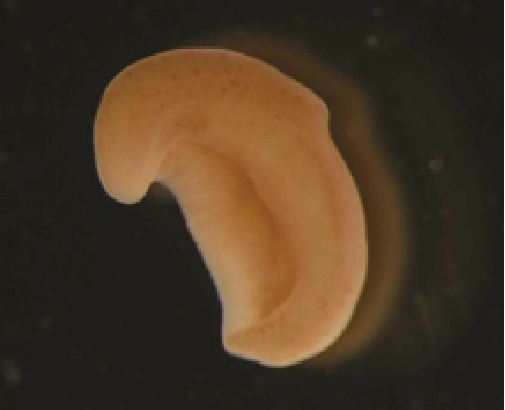
Xenoturbella
Hiroaki NAKANO
There are many extant animals, such as xenacoelomophs and placozoans, that are evolutionarily important but have not been extensively studied. In our group, we perform morphological, ecological, and developmental research on these ‘non-model organisms’ with the aim of gaining new insights on the origins, evolution, and diversity of bilaterians and metazoans.
Publications
2026
- Yañez-Guerra L.A., Mayorova T.D., Duruz J., Muralidhara I., Hardege I., Guan L., Hongo Y., Nakano H., Wijnen H., Senatore A., Watanabe H. & Jékely G. (2026). Prebilaterian origin of monoaminergic signaling. Current Biology, 36(15), 3719-3733.e8.
2025
- Nakano, H. (2025). Placazoa. In Nakamura, Y., Yamasaki, H. & Tanaka, H. (Eds.), Aquatic Small Beautiful Organism -Small Benthos and Plankton Encyclopedia (pp. 156-157). Tōkyō: Asakura Publishing.
- Nakano, H. (2025). Xenacoelomorpha. In Nakamura, Y., Yamasaki, H. & Tanaka, H. (Eds.), Aquatic Small Beautiful Organism -Small Benthos and Plankton Encyclopedia (pp. 172-175). Tōkyō: Asakura Publishing.
2024
- Nakano, H. (2024). Elucidating the origins and early evolution of Bilateria through Xenacoelomorpha. Saibou The CELL, 5(6), 369-372.
- Hayashi M. & Nakano H. (2024). Staging of post-settlement growth in the nudibranch Hypselodoris festiva. Scientific Reports, 14(1), 16157.
2023
- Nakano H., Nakano A., Maeno A. & Thorndyke M.C. (2023). Induced spawning with gamete release from body ruptures during reproduction of Xenoturbella bocki. Communications Biology, 6(1), 172.
2022
- Asai M., Miyazawa H., Yanase R., Inaba K. & Nakano H. (2022). A new species of Acoela possessing a middorsal appendage with a possible sensory function. Zoological Science, 39(1), 147-156.
- Kawashima T., Yoshida M.A., Miyazawa H., Nakano H., Nakano N., Sakamoto T. & Hamada M. (2022). Observing phylum-level metazoan diversity by environmental DNA analysis at the Ushimado area in the Seto Inland Sea. Zoological Science, 39(1), 157-165.
- Kushida Y., Imahara Y., Wee H.B., Fernandez-Silva I., Fromont J., Gomez O., Wilson N., Kimura T., Tsuchida S., Fujiwara Y., Higashiji T., Nakano H., Kohtsuka H., Iguchi A. & Reimer J.D. (2022). Exploring the trends of adaptation and evolution of sclerites with regards to habitat depth in sea pens. PeerJ, 10, e13929.
- Nakano H. (2022). Dawn of Placozoan Phylogenetic Taxonomy. In 100th Anniversary Publication Committee, Seto Marine Biological Laboratory & Kyoto University (Eds.), Marine Invertebrate Biodiversity (pp. 28-38). Kyoto: Kyoto University Academic Press.
- Nakano H., Isowa Y. & Inaba K. (2022). JAMBIO and its coastal organism joint surveys: Network of marine stations explores Japanese coastal biota. Zoological Science, 39(1), 1-6.
2021
- Miyazawa H., Osigus H.J., Rolfes S., Kamm K., Schierwater B. & Nakano H. (2021). Mitochondrial Genome Evolution of Placozoans: Gene Rearrangements and Repeat Expansions. Genome Biology and Evolution, 13(1), evaa213.
- Nakano H., Jimi N., Sasaki T. & Kajihara H. (2021). Sinking down or floating up? Current state of taxonomic studies on marine invertebrates in Japan inferred from the number of new species published between the years 2003 and 2020. Zoological Science, 39(1), 7-15.
- Nakano H. (2021). Xenoturbellida. In Schierwater B. & DeSalle R. (Eds.), Invertebrate Zoology: A Tree of Life Approach (pp. 521-530). Boca Raton: CRC Press.
2020
- Hookabe N., Asai M., Nakano H., Kimura T. & Kajihara H. (2020). A new bathyal tubulanid nemertean, Tubulanus izuensis sp. nov. (Nemertea: Palaeonemertea), from Japanese waters. Proceedings of the Biological Society of Washington, 133(1).
2019
- Kimura T., Kimura S., Naoto J., Kuramochi T., Fujita T., Komai T., Yoshida R., Tanaka H., Okanishi M., Ogawa A., Kobayashi I., Kodama M., Saito M., Kiyono Y., Katahira H., Nakano H., Yoshikawa A., Ueno D., Tanaka M., Oya Y., Maekawa Y., Nakamura T., Okumura J. & Tanaka K. (2019). Benthic deep-sea fauna in south of the Kii Strait and the Sea of Kumano, Japan. 三重大学大学院生物資源学研究科紀要(45), 11-50.
- Maeno A., Kohtsuka H., Takatani K. & Nakano H. (2019). Microfocus X-ray CT (microCT) Imaging of Actinia equina (Cnidaria), Harmothoe sp. (Annelida), and Xenoturbella japonica (Xenacoelomorpha). Journal of Visualized Experiments(150), 59161.
- Nakano H. & Miyazawa H. (2019). A New Species of Orthonectida That Parasitizes Xenoturbella bocki : Implications for Studies on Xenoturbella. The Biological Bulletin, 236(1), 66-73.
- Nakano H. (2019). Development of Xenoturbellida. In Tworzydlo W. & Bilinski S.M. (Eds.), Evo-Devo: Non-model Species in Cell and Developmental Biology (pp. 251-258). Cham: Springer International Publishing.
- Philippe H., Poustka A.J., Chiodin M., Hoff K.J., Dessimoz C., Tomiczek B., Schiffer P.H., Müller S., Domman D., Horn M., Kuhl H., Timmermann B., Satoh N., Hikosaka-Katayama T., Nakano H., Rowe M.L., Elphick M.R., Thomas-Chollier M., Hankeln T., Mertes F., Wallberg A., Rast J.P., Copley R.R., Martinez P. & Telford M.J. (2019). Mitigating Anticipated Effects of Systematic Errors Supports Sister-Group Relationship between Xenacoelomorpha and Ambulacraria. Current Biology, 29(11), 1818-1826.e6.
2018
- Kohtsuka H., Tsuchiya Y. & Nakano H. (2018). First report of live Balanometra balanoides (Echinodermata: Crinoidea), with observations on its coloration, collected from the Sagami Sea. Biogeography, 20, 41-44.
- Miyazawa H. & Nakano H. (2018). Multiple surveys employing a new sample-processing protocol reveal the genetic diversity of placozoans in Japan. Ecology and Evolution, 8(5), 2407-2417.
2017
- Kakui K., Suzuki A., Nakano H. & Kohtsuka H. (2017). Habitat of a tanaidacean Apseudes nipponicus Shiino, 1937. Bull. Kitakyushu Mus. Nat. Hist. Hum. Hist., Ser. A, 15, 1-3.
- Nakano H., Miyazawa H., Maeno A., Shiroishi T., Kakui K., Koyanagi R., Kanda M., Satoh N., Omori A. & Kohtsuka H. (2017). A new species of Xenoturbella from the western Pacific Ocean and the evolution of Xenoturbella. BMC Evolutionary Biology, 17(1), 245.
2015
- Amemiya S., Hibino T., Nakano H., Yamaguchi M., Kuraishi R. & Kiyomoto M. (2015). Development of ciliary bands in larvae of the living isocrinid sea lily Metacrinus rotundus . Acta Zoologica, 96(1), 36-43.
- Nakano H., Kakui K., Kajihara H., Shimomura M., Jimi N., Tomioka S., Tanaka H., Yamasaki H., Tanaka M., Izumi T., Okanishi M., Yamada Y., Shinagawa H., Sato T., Tsuchiya Y., Omori A., Sekifuji M. & Kohtsuka H. (2015). JAMBIO Coastal Organism Joint Surveys reveals undiscovered biodiversity around Sagami Bay. Regional Studies in Marine Science, 2, 77-81.
- Nakano H. (2015). What is Xenoturbella? Zoological Letters, 1(1), 22.
2014
- Nakano H. (2014). Survey of the Japanese Coast Reveals Abundant Placozoan Populations in the Northern Pacific Ocean. Scientific Reports, 4(1), 5356.
2013
- Nakano H., Lundin K., Bourlat S.J., Telford M.J., Funch P., Nyengaard J.R., Obst M. & Thorndyke M.C. (2013). Xenoturbella bocki exhibits direct development with similarities to Acoelomorpha. Nature Communications, 4(1), 1537.
2011
- Obst M., Nakano H., Bourlat S.J., Thorndyke M.C., Telford M.J., Nyengaard J.R. & Funch P. (2011). Spermatozoon ultrastructure of Xenoturbella bocki (Westblad 1949). Acta Zoologica, 92(2), 109-115.
- Philippe H., Brinkmann H., Copley R.R., Moroz L.L., Nakano H., Poustka A.J., Wallberg A., Peterson K.J. & Telford M.J. (2011). Acoelomorph flatworms are deuterostomes related to Xenoturbella. Nature, 470(7333), 255-258.
2010
- Kjeldsen K.U., Obst M., Nakano H., Funch P. & Schramm A. (2010). Two Types of Endosymbiotic Bacteria in the Enigmatic Marine Worm Xenoturbella bocki. Applied and Environmental Microbiology, 76(8), 2657-2662.
- Squires L.N., Rubakhin S.S., Wadhams A.A., Talbot K.N., Nakano H., Moroz L.L. & Sweedler J.V. (2010). Serotonin and its metabolism in basal deuterostomes: insights from Strongylocentrotus purpuratus and Xenoturbella bocki. Journal of Experimental Biology, 213(15), 2647-2654.
2009
- Nakano H., Nakajima Y. & Amemiya S. (2009). Nervous system development of two crinoid species, the sea lily Metacrinus rotundus and the feather star Oxycomanthus japonicus. Development Genes and Evolution, 219(11-12), 565-576.